NASA details LOXSAT, a Rocket Lab-launched test of in-orbit liquid oxygen handling
A nine-month orbital demonstration by Eta Space will test storing and transferring liquid oxygen, a building block for propellant depots.
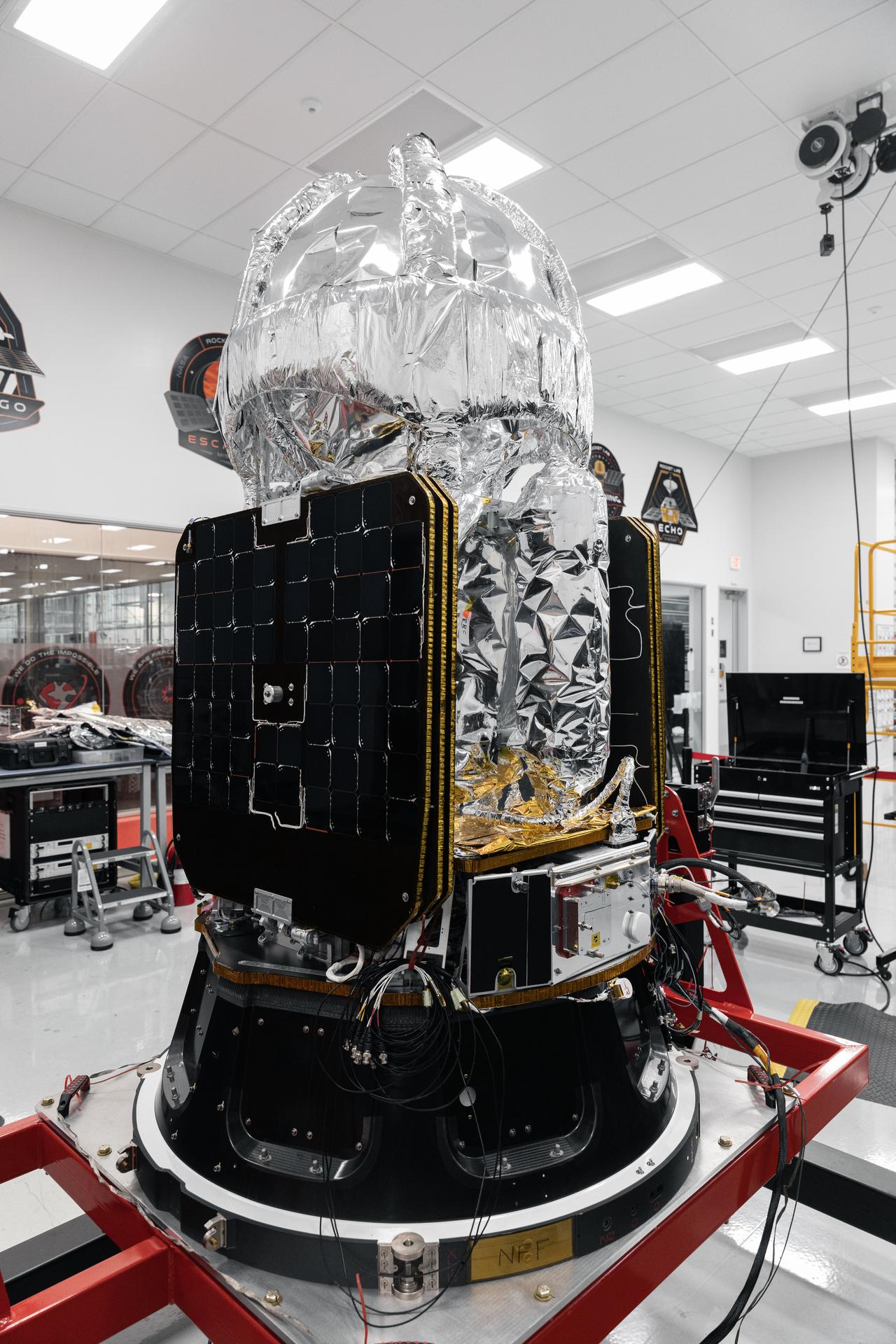
NASA has published an overview of LOXSAT, a flight demonstration meant to show how liquid oxygen can be stored, pressurised and moved between tanks in low Earth orbit. The agency’s page does not give a launch date, so the timing of the flight remains unannounced in the material reviewed here.
What flies
The payload is built by Eta Space of Rockledge, Florida, under a NASA Tipping Point contract awarded in 2020, and is integrated with a Rocket Lab Photon satellite bus. It is to launch on Rocket Lab’s Electron from Launch Complex 1 on New Zealand’s Mahia Peninsula and spend about nine months in orbit. The work sits in NASA’s Cryogenic Fluid Management Portfolio Project, part of its Research and Technology Mission Directorate. On 12 February, NASA’s cryogenic fluid management team toured Rocket Lab’s Long Beach facility to see the LOXSAT payload and its vibration-test setup.
Why liquid oxygen is hard
Oxygen has to stay near minus 300 degrees Fahrenheit or it boils into vapour, and in microgravity liquids drift and cling to surfaces instead of settling at the bottom of a tank, which complicates any transfer. LOXSAT will test transfer between tanks, active cooling combined with passive insulation, and pressurisation with minimal losses.
Why it matters
NASA says the results support in-space propellant depots for refuelling spacecraft bound for the Moon, Mars or deeper. Propellant transfer is a pacing item for large lunar architectures, which need to move large quantities of cryogens in orbit. The roles are split cleanly: NASA funds the technical design and receives flight data, Eta Space operates the hardware, and NASA’s project handles oversight, requirement reviews, risk management and readiness assessments.
Sean Kenny, acting manager of the Cryogenic Fluid Management Portfolio Project, said: “Every in-space demonstration teaches us something we can’t learn in a lab.”
A small demonstration is a long way from a working depot, and the page gives no performance targets or success criteria. It is nonetheless a rare orbital test of cryogenic handling by a commercial small-satellite bus.
// Signal sources
Machine-written by AI from the sources above